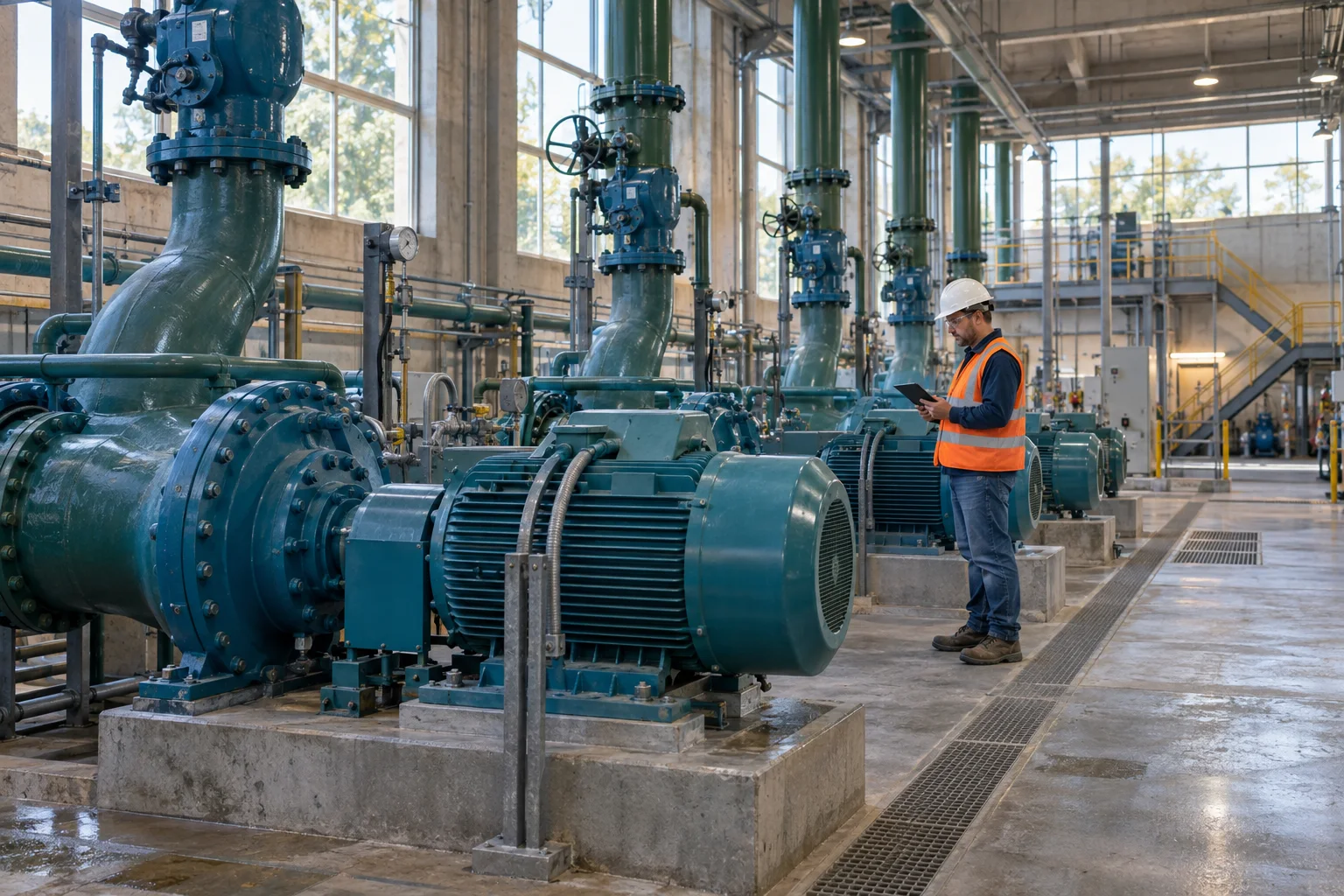
Energy analytics in water and wastewater facilities evaluates pump, blower and other electrical loads together with flow, pressure and operating conditions to reveal efficiency losses and maintenance priorities. The objective is not merely to reduce total consumption, but to understand the energy cost of each operation while protecting service continuity.
Why is energy a critical indicator in water facilities?
Pumping stations, drinking-water pumps, aeration blowers and sludge processes rely on motor-driven equipment that operates for long periods. The total electricity bill matters, but it cannot explain which process changed or why. Consumption becomes more useful when connected to flow, pressure, level and operating time.
How can pump performance be evaluated?
Energy consumption can be tracked over time under comparable flow and pressure conditions. If the same hydraulic work gradually requires more energy, teams may need to investigate controls, blockage, wear, valve position or the system curve. Electrical data does not identify a certain cause on its own; it directs field inspection.
Which data should be considered together?
- Active power, energy, current and power factor
- Flow, pressure, level and operating time
- Pump or blower operating combinations
- Start frequency, shifts and tariff periods
- Maintenance records and process changes
What does specific energy consumption mean?
Specific energy consumption is the energy used per unit of service output, such as kilowatt-hours per cubic metre pumped. With correctly defined measurement boundaries, it helps compare periods or similar stations. Comparisons can be misleading if elevation, pressure targets and water quality requirements are ignored.
How does energy analytics support maintenance?
When consumption, operating patterns and anomaly signals are viewed together, teams can identify which unit deserves earlier inspection. This does not guarantee that unplanned downtime will be prevented. It provides evidence for prioritizing checks and evaluating a change before it becomes larger.
How is Cinga positioned in water infrastructure?
Cinga is designed to organize data from suitable measurement points through centralized analytics and explainable scores. It does not replace existing SCADA or automation; it adds visibility for energy, equipment behavior and intervention priority. Scope is defined through facility discovery and validation of the measurement infrastructure.
Frequently asked: Can the same model be used at every pumping station?
No. Pump type, hydraulic conditions, measurement quality and operating objectives differ. Each station needs its own comparison boundaries and definition of normal operating conditions.