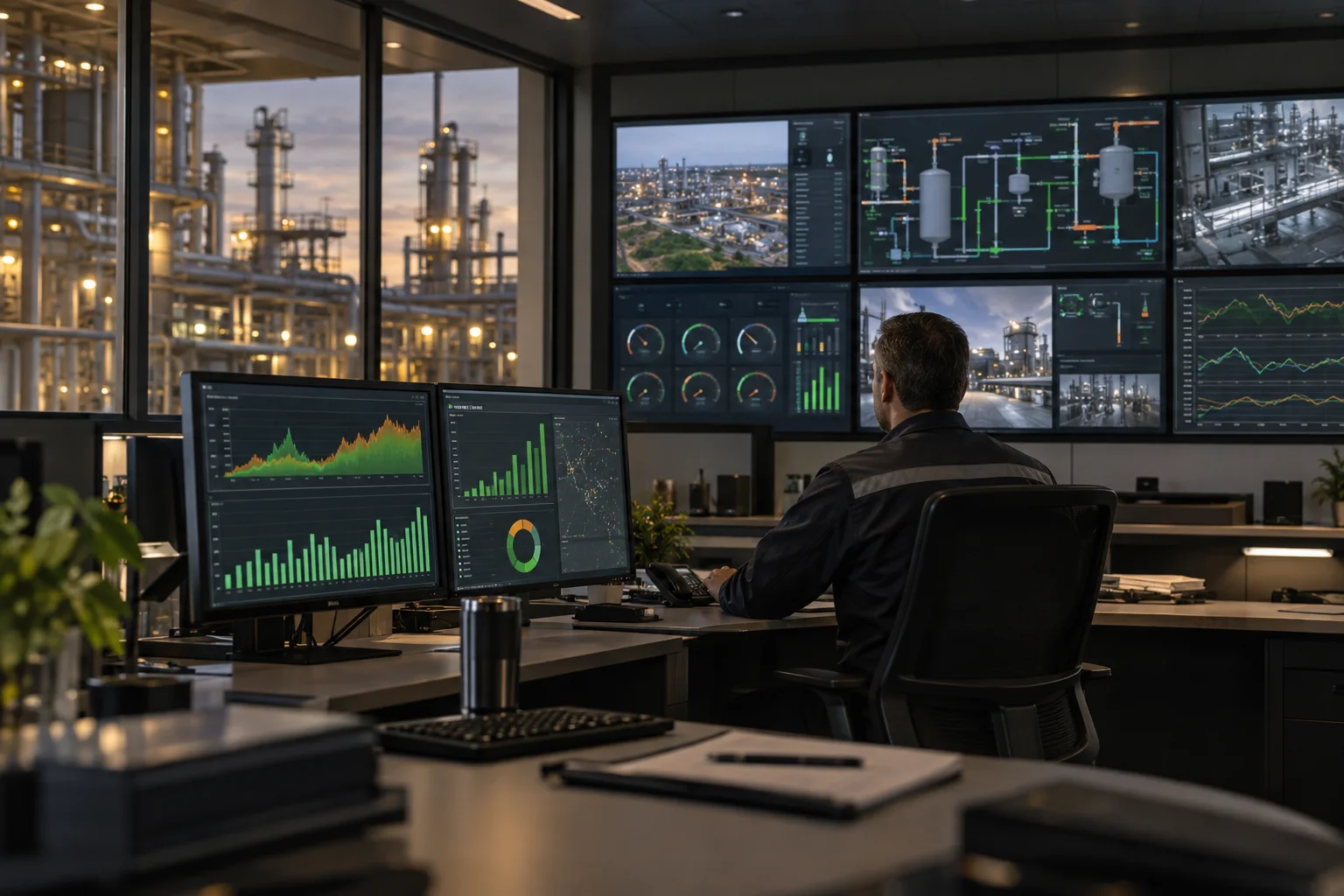
SCADA and Cinga are not replacements for one another. SCADA handles real-time monitoring and control, while Cinga adds a complementary decision-support layer for historical behavior, energy analytics and intervention priority. A well-designed integration protects the existing automation investment and gives operational data additional context.
What is the primary role of SCADA?
SCADA collects field data, presents process status to operators, manages alarms and transmits authorized control commands. Real-time operation and safe control remain its central responsibilities.
What does an energy analytics layer add?
Energy analytics examines longer time windows. It evaluates normal operating patterns, consumption trends, power-quality indicators and changes in equipment behavior. A real-time event on an operator screen can therefore be viewed in a broader maintenance and efficiency context.
How can data flow between SCADA and Cinga?
The integration model depends on facility security policy and the existing architecture. Selected tags may be obtained through an authorized interface, parallel field devices may collect data at suitable points, and summary scores or reports may be sent to higher-level systems. Control responsibilities and analytical data flows should remain clearly separated.
- Define the required data points and sampling intervals first.
- Preserve network segmentation, authorization and logging policies.
- Keep timestamps and asset identities consistent.
- Validate results against field conditions before operational use.
Does the existing SCADA need to be replaced?
Usually not. Instead of making unnecessary changes to a working control architecture, the project defines how the analytics layer can access the data it needs. The right method is selected after reviewing system age, protocols, cybersecurity requirements and operational priorities.
What is the operational benefit of using both?
Operations teams can continue using real-time control screens while energy and maintenance teams follow behavioral trends, comparisons and priority indicators. This separation lets each system focus on the task it performs best.
Frequently asked: Will integration stop production?
That depends on the implementation. Parallel, read-only data access can often be planned without interfering with control flows. Connection, testing and commissioning must still follow the facility’s change-management and safety procedures.